AI, ML and Statistical Learning
Machine learning, statistical learning, interpretable models, large language models, and advanced analytics.
University of the Witwatersrand · Johannesburg
ADSC 2026 brought together researchers, practitioners, policymakers, and industry leaders for a continental platform on data science, artificial intelligence, responsible innovation, and African-centred digital transformation.
Conference gallery
Highlights from keynotes, scientific sessions, panels, workshops, networking, exhibitions, and the gala dinner at Wits Science Stadium.
Loading photos…
Conference Positioning
ADSC 2026 brought together researchers, postgraduate students, academics, data scientists, industry practitioners, policymakers, innovators, institutional leaders, development partners, and sponsors working across data science, AI, machine learning, statistics, analytics, and digital transformation.
The conference connected scholarly excellence with practical relevance through research exchange, postgraduate development, responsible AI dialogue, industry engagement, policy discussion, exhibitions, and cross-sector collaboration.
Themes
Machine learning, statistical learning, interpretable models, large language models, and advanced analytics.
Ethics, accountability, fairness, transparency, data governance, policy, and institutional readiness.
Health, finance, climate, energy, education, geospatial analytics, business, sustainability, and public services.
Postgraduate development, curriculum innovation, research infrastructure, open data, and data science pedagogy.
Programme
Final programme as delivered at the conference. See the full day-by-day schedule below. View full programme PDF Download programme PDF
Pre-conference
Workshops
Registration / Breakfast Tea
Welcome and orientation
Morning parallel half-day workshops
Lunch
Afternoon parallel half-day workshops
Workshop close and informal networking
Day one
Registration / Breakfast Tea
Master of Ceremony — opening
Official welcome to Wits · Prof Ian Jandrell
Keynote · Prof Benjamin Rosman
Parallel Scientific Sessions: Session 1 (All Tracks)
Tea
Parallel Scientific Sessions: Session 2 (All Tracks)
Lunch
Keynote · Prof Maurice Radebe
Transition to panel session
Tea, posters, sponsor engagement, and networking
Data Science Hiring and Employability in Africa
Day two
Breakfast Tea
Master of Ceremony — intro
Conference Chair introduction
Keynote · Prof Vukosi Marivate
Parallel Scientific Sessions: Session 3 (All Tracks)
Tea
Keynote · Prof Inger Fabris-Rotelli
Plenary invited paper · Animated Biplot Visualisations of African Climate Patterns
Industry engagement · ISAZI Consulting
Lunch
Keynote · Prof Karin-Therese Howell
Transition to panel session
Data, AI and Strategy networking lounge
Gala Dinner
Day three
Breakfast Tea
Master of Ceremony — intro
Plenary · Adapting Curricula for the Rapid Evolution of Data Science
Plenary invited paper · AI-Enabled Optimisation of Geological and Mineral Resource Models
Plenary invited paper · Evaluating Multimodal LLM Diagnostic Performance
Transition to panel session
Tea
Lunch
Wits closing session and prize giving
Closing keynote and conference close · Prof Loyiso Nongxa
Digital Dome experience
Post-conference
Optional activity
Optional Joburg Sightseeing Bus Tour — sponsored by Joburg Tourism Company. Delegates may register for this optional post-conference activity to experience Johannesburg as one of Africa's major centres of history, culture, finance, innovation, and urban transformation. As places may be limited, preference will be given to delegates travelling from outside South Africa. Further logistical details, including departure time, meeting point, capacity, cost if applicable, and registration arrangements, will be communicated during the conference.
Plenary panels
Collectively, these panels are intended to create meaningful conversations that bring together academic, industry, policy, and leadership perspectives on the future of data science and AI in Africa. They will also help position ADSC 2026 as a platform where technical excellence, institutional relevance, business value, governance, and societal impact are discussed together.
Chair: Dr Nomalanga Mashinini
Affiliation: Wits School of Law, University of the Witwatersrand
Accountability, sovereignty, and the architecture of responsible AI — exploring governance challenges facing African data science and artificial intelligence, including data sovereignty, algorithmic accountability, and the political economy of AI governance.
Wednesday 24 June · 14:45 – 16:00 · ProgrammeChair: Dr Pravesh Ranchod
Affiliation: School of Computer Science and Applied Mathematics, University of the Witwatersrand
How curricula, pedagogy, assessment, and training pathways must evolve as AI tools transform data science education — balancing accessibility and employability with statistical and computational rigour.
Thursday 25 June · 14:45 – 16:00 · ProgrammeChair: Prof Daniel Nicolas Wilke
Affiliation: School of Mechanical, Industrial and Aeronautical Engineering, University of the Witwatersrand
Perspectives from quantum computing, machine learning, banking, industry research, engineering, and consulting on how data science is changing across sectors — and where its promise and risks are most visible.
Friday 26 June · 09:50 – 10:45 · ProgrammeSubtitle: From Experimentation to Scaled Impact
Chair: Prof Rennie Naidoo
Affiliation: School of Business Sciences, University of the Witwatersrand
How organisations can move beyond AI pilots toward scaled, measurable, and sustainable business impact through leadership, data foundations, operating models, skills, and change management.
Friday 26 June · 11:20 – 13:00 · ProgrammeAhead of the conference, registered delegates shared expectations, questions, and key issues they hoped each plenary panel would address. Chairs and panellists used this input to prepare more targeted discussions.
For follow-up or proceedings enquiries, email adsc2026@easychair.org.
Pre-Conference Workshops
Foundations and practical pathways for quantum-informed machine learning and data science.
Morning · 09:00 – 12:00 · Dr Isaac Nape, University of the WitwatersrandHealthcare-focused machine learning and AI methods for clinical and operational impact.
Morning · 09:00 – 12:00 · Prof Innocent Maposa; Dr Yusentha Balakrishna, Dr Isaac Singini, and Mr Siyabonga Mavundla, SAMRCHow connectivity and computing infrastructure enable trustworthy AI deployment in African contexts.
Morning · 09:00 – 12:00 · Dr Songezo Soso Mata and the ICASA TeamTop-tier publishing, research data management, and open research impact with Wits Libraries and the Wits Open Data Vault.
Afternoon · 13:00 – 16:00 · Prof Moinak Maiti; Maria Cotera, Figshare; Wits Libraries / Wits Open Data Vault TeamApplied foundations for spatial statistics, GIS, remote sensing, and geospatial analytics.
Afternoon · 13:00 – 16:00 · Prof Inger Fabris-Rotelli, University of PretoriaPractical approaches to building reliable, accountable data science workflows with large language model agents.
Afternoon · 13:00 – 16:00 · Naweed Khan and Dr Ndivhuwo Makondo, IBM ResearchSix parallel half-day workshops on Tuesday 23 June: three in the morning (09:00 – 12:00) and three in the afternoon (13:00 – 16:00), with registration from 08:00. Welcome and orientation by Dr Ndivhuwo Makondo at 08:30. Workshop fee: R1,500 per workshop.
Registered participants shared what they hoped to learn, challenges they were facing, and practical skills they wanted to gain from each pre-conference workshop. Facilitators used this feedback to tailor sessions.
For follow-up enquiries, email adsc2026@easychair.org.
Speakers
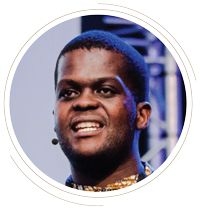
Professor Vukosi Marivate is a Professor of Computer Science at the University of Pretoria, Director of the African Institute for Data Science and Artificial Intelligence (AfriDSAI), and holder of the ABSA UP Chair of Data Science. He also serves on the United Nations Independent International Scientific Panel on Artificial Intelligence. His work focuses on machine learning, artificial intelligence, and natural language processing, with a strong emphasis on local and low-resource African languages. He leads the Data Science for Social Impact research group and has worked on projects in science, energy, public safety, and utilities. He is also a co-founder of Lelapa AI, the Masakhane Research Foundation, and the Deep Learning Indaba.
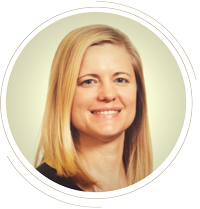
Professor Inger Fabris-Rotelli is a Professor in the Department of Statistics at the University of Pretoria. She is the immediate past President of the South African Statistical Association (SASA), co-chair of the SASA Data Science Group, and is active in the broader mathematical sciences and data science community, including NITheCS-related activities. She has made significant contributions to postgraduate supervision and research development in statistics and data science, and has supervised many honours, master's, and doctoral students. Her research interests include spatial statistics, GIS, remote sensing, image processing, spatial epidemiology, and criminology. She is an NRF-rated researcher and has served in several professional leadership roles nationally and internationally.
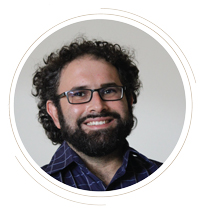
Professor Benjamin Rosman is a Professor in the School of Computer Science and Applied Mathematics at the University of the Witwatersrand, founding Director of the Machine Intelligence and Neural Discovery (MIND) Institute, and head of the Robotics, Autonomous Intelligence and Learning (RAIL) Laboratory. He was also named in TIME magazine's TIME100 AI 2025 list, in the Thinkers category, in recognition of his contribution to artificial intelligence and the growth of Africa's AI ecosystem.
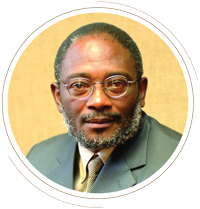
Professor Loyiso Nongxa is an eminent South African mathematician, Professor Emeritus at the University of the Witwatersrand, Honorary Professor at the University of Pretoria, and Extraordinary Professor at the University of the Western Cape. He served as Deputy Vice-Chancellor for Research at Wits and later as Vice-Chancellor and Principal of the University from 2003 to 2013. A Rhodes Scholar, he obtained his doctorate in Mathematics from the University of Oxford in 1982, after completing his earlier studies at the University of Fort Hare. His academic work has included group theory, while his more recent scholarly interests include the mathematical foundations of data science and machine learning. He has also served as Chairperson of the National Research Foundation and as one of the Vice-Presidents of the International Mathematical Union.
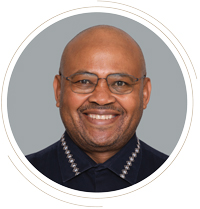
Professor Maurice Radebe is Faculty Director in Commerce, Law and Management at the University of the Witwatersrand and an Adjunct Professor at Wits Business School. He previously served as Head and Director of Wits Business School and as Executive Vice President responsible for Sasol's global Energy Business. His executive career spans more than three decades in the energy sector, including senior leadership roles at Shell, Exel, and Sasol, with extensive experience in strategy, operations, market development, restructuring, and major energy projects across Africa and internationally. He is also the Founder and Chairman of the Unleashing Leadership Potential Foundation in South Africa. Since joining Wits Business School as an Executive in Residence in 2013, he has contributed significantly to bringing real-world business and energy-sector leadership experience into the academic environment.
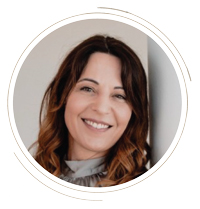
Professor Karin-Therese Howell is the Executive Director of AIMS South Africa and holds the academic rank of Associate Professor in Mathematics at Stellenbosch University. She holds a PhD in Mathematics from the University of the Free State and has published in international peer-reviewed journals. Her research focuses on abstract algebra, particularly near-vector spaces, and extends into algebraic biology, where biological problems are studied through algebraic structures and methods. She is also deeply committed to mathematics education, having received multiple Vice-Rector's Awards for Excellence in First-Year Teaching at Stellenbosch University. Her broader academic leadership includes advancing mathematics in Africa, supporting women in mathematics, and promoting greater inclusivity in the mathematical sciences.
Prof. Ian Jandrell, Deputy Vice-Chancellor: Systems and Operations at Wits University.
Prof. Lynn Morris, Deputy Vice-Chancellor: Research and Innovation at Wits University.
Registration
The conference took place 23–26 June 2026. Registration fees below are retained for reference.
Extended deadline: 15 May 2026. Student proof may be required.
Extended deadline: 15 May 2026. Gala dinner excluded.
Standard registration deadline: 5 June 2026.
Standard registration deadline: 5 June 2026.
Includes gala dinner, priority seating, networking access, and related benefits.
Gala dinner: R1,200. Workshops: R1,500 each. Additional paper fee: R1,000.
Proceedings and Publications
Accepted abstracts may be presented at the conference. Proceedings inclusion is subject to full paper submission, review, formatting compliance, editorial checks, and Scientific Committee approval.
Selected high-quality full papers may be invited for consideration in the edited volume Statistics/ML/AI in Action for Sustainable Development, expected by Springer in mid-2027 as part of the ICSA Book Series in Statistics.
Sponsorship
Website logo, programme acknowledgement, opening recognition, one full registration.
Bronze benefits, two full registrations, exhibition space, selected communication recognition.
Silver benefits, premium logo placement, bag insert, and themed session, panel, or student activity sponsorship.
Gold benefits, four registrations, premium branding, brief speaking opportunity, and priority exhibition presence.
Official bag branding, exhibition presence, inserts, programme acknowledgement, and two registrations.
Sponsorship of up to three workshops, workshop programme acknowledgement, branding, and two registrations.
Sponsors and Partners

















Governance
Dr Farai Mlambo, University of the Witwatersrand
Chaired by Prof. Inger Fabris-Rotelli, University of Pretoria. Safeguards academic integrity, peer review, and scholarly direction.
Chaired by Dr Taariq Surtee, University of the Witwatersrand. Coordinates operations, logistics, venue, scheduling, and communication.
Develops plenaries, technical sessions, panels, workshops, and academic activities under Scientific Committee oversight.
The 2026 programme includes four cross-cutting plenary panels—on data and AI governance, data science education, advances in data science, and AI in business transformation—designed to connect academic, industry, policy, and leadership perspectives. Pre-conference workshops (23 June) are curated for depth and practical value alongside the main scientific programme.
Oversee editorial quality, formatting compliance, publication readiness, and scholarly coherence.
They work with authors of accepted full papers and ensure proceedings align with the Scientific Committee’s standards and timelines communicated to delegates.
Chaired by Dr Isaac Nyambiya, Great Zimbabwe University. Supports sponsorship, partnerships, and resource mobilisation.
The committee engages universities, industry, government, and foundations so ADSC can remain accessible—supporting student participation, exhibitions, and sustainable conference delivery.
ADSC 2026 foregrounds dialogue across governance, education, methods, and business transformation. Each panel has a named chair from Wits or partner institutions; full chair affiliations and descriptions are on the panels page.
Registered delegates may contact the organising team for follow-up.
Prof. Kanshukan Rajaratnam, Prof. Paida Mhangara, Prof. Thokozani Majozi, Prof. Costa Hofisi, Prof. Charis Harley, and Dr Sibusisiwe Khuluse Makhanya.
The ADSC 2026 Advisors bring together distinguished academic, research, industry, and institutional leaders whose expertise spans data science, artificial intelligence, geospatial analytics, engineering, public policy, governance, sustainability, and interdisciplinary research. Their collective experience strengthens the strategic, academic, and societal orientation of the conference.
Professor Paida Mhangara is Head of the School of Geography, Archaeology and Environmental Studies at the University of the Witwatersrand and a Wits MIND Fellow. He is a senior Earth Observation scientist whose work spans remote sensing, land-atmosphere interactions, machine learning for land-cover characterisation, and advanced geospatial modelling for environmental monitoring.
Professor Kanshukan Rajaratnam is Director of the School for Data Science and Computational Thinking at Stellenbosch University. He is widely recognised for his leadership in building data science capacity in South Africa and for advancing interdisciplinary work at the intersection of data science, policy, and strategic decision-making.
Professor Thokozani Majozi is Deputy Vice-Chancellor for Research and Internationalisation at the University of Cape Town. He is a distinguished scholar in sustainable process engineering and a highly respected academic leader whose work has made important contributions to engineering research, innovation, and the broader higher education sector.
Professor Costa Hofisi is Professor of Public Administration at North-West University and a leading scholar in public policy, public sector innovation, monitoring and evaluation, governance, and research methods. His work is strongly aligned with questions of institutional development, public value creation, and the role of innovation in strengthening public administration and governance in African contexts.
Professor Charis Harley is Professor in the Faculty of Engineering and the Built Environment at the University of Johannesburg and Head of the Data Science Across Disciplines Research Group. She is a computational mathematician whose work spans numerical methods, data analysis, data science, machine learning, and interdisciplinary applications of computational modelling.
Dr Sibusisiwe Khuluse Makhanya is Senior Research Manager and Leader at IBM Research Africa in Johannesburg. She has a technical background in statistics and holds a PhD in Spatial Statistics. Her work spans artificial intelligence, quantum computing, applied statistical learning, risk modelling, causal modelling, trustworthy AI, climate science, sustainability, and health-related applications of data science.
Future Editions
The governance framework, committee roles, programme architecture, sponsorship materials, and post-conference records can be preserved as a template for future ADSC editions.
The site structure is designed to grow with new host institutions, themes, speakers, sponsors, publication pathways, accommodation lists, and regional priorities.
Venue and Accommodation
Wits Science Stadium, University of the Witwatersrand, 1 Jan Smuts Avenue, Braamfontein, Johannesburg, South Africa.
Visit Wits UniversityThursday 25 June, 18:00–21:00 — The Rooftop Restaurant, 2nd Floor, 99 Oxford Rd, Saxonwold, Johannesburg, 2132.
Visit The Rooftop RestaurantCnr Princess of Wales Terrace & Carse O'Gowrie, Parktown, Johannesburg, South Africa.
Tel: +27 (0) 87 630 0446
Hotel website Book at discounted rate (ADS2026)Cnr Empire Road and Owl Street, Johannesburg, 2073, South Africa.
Book online Hotel websiteStay your way at MINT Hotel Rosebank — hotel rooms and self-catering apartments in the heart of Rosebank.
Use promocode MHRSJHBT2026 when booking.
Book onlineMany nationalities need a visa to enter South Africa. For future ADSC editions or related travel, check the latest rules well in advance.
Practical checklist: confirm whether you need a visa; ensure your passport meets validity rules; gather supporting documents; allow time for processing; keep copies of your application and decision.
This is general information only, not legal advice. You are responsible for confirming the requirements that apply to you.
South Africa visa requirements for visitors (OR Tambo travel guide)FAQ
ADSC 2026 was held at Wits Science Stadium, Johannesburg, from 24–26 June 2026, with optional pre-conference workshops on 23 June and an optional sightseeing activity on 27 June.
ADSC 2026 is organised under a formal governance framework hosted by the University of the Witwatersrand, with advisors, scientific, programme, proceedings, organising, and fundraising structures.
Yes. ADSC 2026 welcomes presenters and non-presenting delegates from academia, industry, government, development organisations, and civil society.
Many international visitors need a visa to enter South Africa; others may be exempt for short visits, depending on nationality and the purpose of the trip. Requirements change, so check early, allow time for an application if you need one, and confirm with a South African embassy, high commission, or consulate when in doubt.
For a practical overview you can start with the OR Tambo Airport guide to visas and permits. On this site, see Visas for South Africa under Venue and accommodation. This is general information, not legal advice.
Many international visitors require a visa. Requirements depend on your nationality and the purpose of your trip. Review a current visitor visa overview—for example the OR Tambo Airport travel guide to visas and permits—before you book flights or accommodation, and confirm details with your nearest South African mission if you need a visa.
See also the Visas for South Africa summary on this site. This is not legal advice; confirm what applies to your passport.
Travel and accommodation funding is not automatically provided. Sponsorship support may be considered if funding becomes available, with priority potentially given to postgraduate students, early-career researchers, and under-resourced institutions.
No. Workshops are optional extras and cost R1,500 per workshop. Delegates should select workshop options during registration.
Yes. Registered delegates can continue to use the Delegate Portal for schedules, messages, directory, and meetups.
Browse the photo gallery on this site for highlights from keynotes, sessions, panels, networking, and the gala dinner.
Delegate input was collected ahead of the conference. For follow-up or proceedings enquiries, email adsc2026@easychair.org.
The final programme is on this site and in the programme PDF. Updates were also shared via the registration portal, LinkedIn, and official conference channels.
Yes. The gala dinner took place on Thursday 25 June at The Rooftop Restaurant, 2nd Floor, 99 Oxford Rd, Saxonwold, Johannesburg, 2132.
ADSC 2026 intends to publish proceedings for eligible full papers, subject to peer review, formatting compliance, editorial checks, and Scientific Committee approval.
Sponsorship packages and tailored partnerships remain available for universities, research institutes, government departments, industry partners, professional bodies, technology organisations, foundations, and development agencies.
Resources